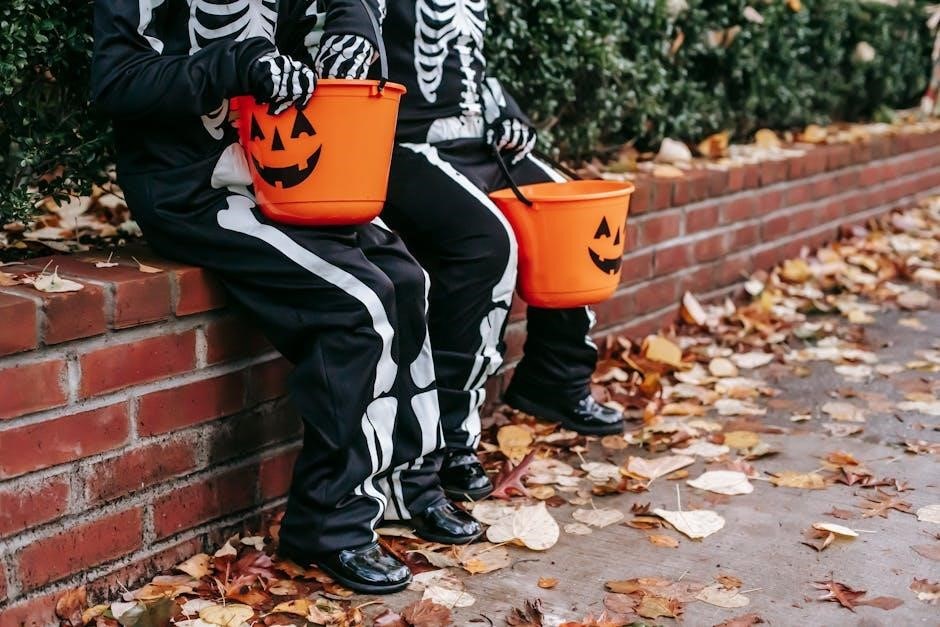
The Modern Guide to Trick-or-Treating Etiquette & Rules (2026)
Navigating the annual Halloween ritual requires understanding evolving customs; children, in costumes, request treats, while residents offer candy, fostering neighborly encounters and autumnal joy.
Historically, trick-or-treating involved nuts and apples, but now, candy reigns supreme, prompting debates on full-size versus fun-size offerings and confectionary etiquette.
Some communities even host candy buy-back programs, while others grapple with establishing clear rules regarding age restrictions and appropriate behavior during these festive rounds.
Historical Roots of Trick-or-Treating
The origins of trick-or-treating are deeply interwoven with ancient Celtic traditions and medieval practices. The custom evolved from “souling,” where poor people would go door-to-door offering prayers for the dead in exchange for food – a practice dating back to the 9th century. This early form of begging was believed to help souls reach heaven.
Later, in medieval Britain and Ireland, “guising” emerged, where young people would dress up in costumes and go house to house reciting verses or performing tricks in exchange for food or money. This practice, a precursor to modern trick-or-treating, was particularly popular during Hallowmas, the evening before All Saints’ Day.
Immigrants, particularly the Irish, brought these traditions to North America in the 19th century. However, it wasn’t until the early 20th century that trick-or-treating as we know it began to take shape, becoming a widespread and beloved Halloween activity. Early offerings included nuts, apples, and homemade treats, a far cry from the commercially produced candies of today.
The Evolution of Costumes
Initially, Halloween costumes were rooted in the belief that mimicking spirits or disguising oneself could ward off evil entities. Early costumes were often simple, utilizing readily available materials to create representations of ghosts, goblins, and other mythical creatures. These weren’t elaborate affairs, but served a protective purpose.
As trick-or-treating gained popularity in the 20th century, costumes evolved from frightening disguises to more playful and imaginative creations. The influence of popular culture – movies, television, and comic books – became increasingly apparent, with children emulating their favorite characters.
The mid-20th century saw the rise of mass-produced costumes, making elaborate designs more accessible. Today, costumes range from classic monsters to superheroes, princesses, and everything in between. Donning a “silly costume” is now a celebrated aspect of the holiday, emphasizing fun and creativity over fear. The trend continues to evolve with each passing year.
What to Expect: Current Trick-or-Treating Trends
Contemporary trick-or-treating reflects a blend of tradition and modern adaptation. While the core activity – children soliciting candy – remains constant, several trends are shaping the experience in 2026. Increased awareness of allergies and dietary restrictions is leading more homeowners to offer non-candy alternatives, like small toys or stickers.
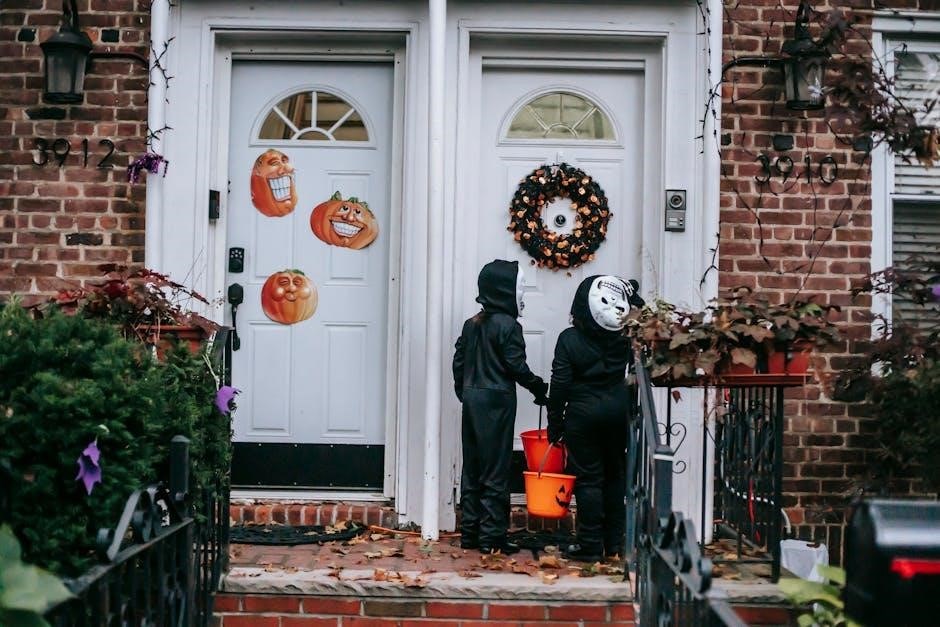
“Trunk-or-Treat” events, where decorated car trunks distribute treats in a controlled environment, are gaining popularity as a safer alternative to traditional door-to-door visits. Community-based Halloween celebrations are also on the rise, fostering a sense of togetherness;
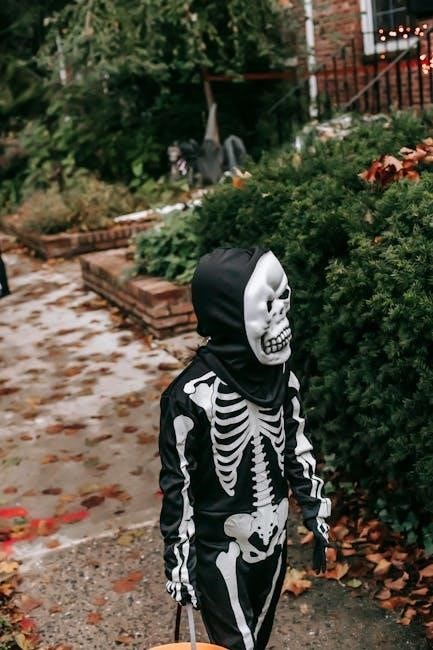
Furthermore, some families are participating in “candy buy-back” programs, where excess candy is collected and donated or exchanged for other rewards. Concerns about safety and appropriate behavior have prompted some cities to revisit and update their trick-or-treating rules, including potential age restrictions and curfews.
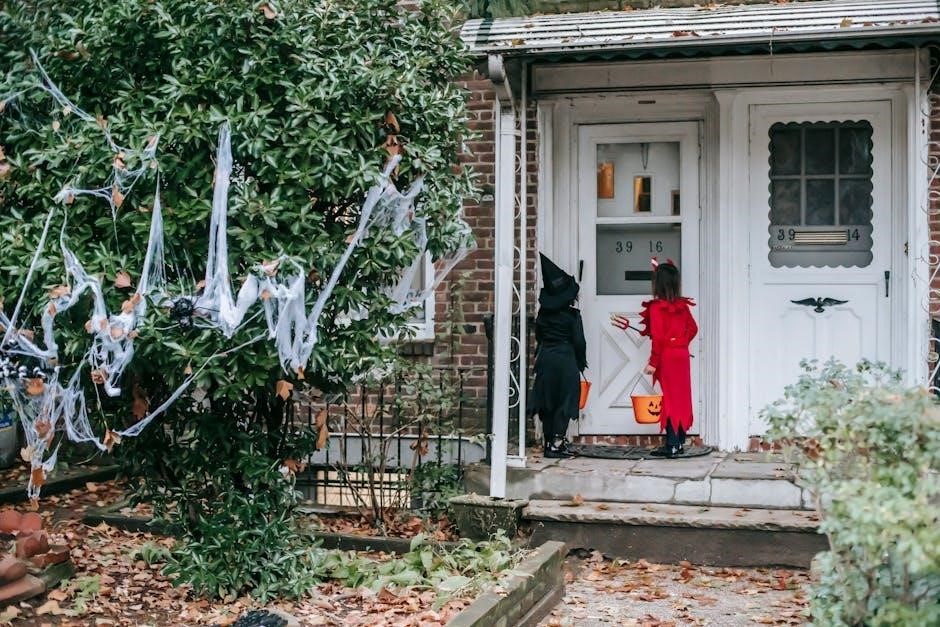
Navigating Trick-or-Treating Etiquette for Kids
Polite requests, gratitude for treats, and respectful behavior are essential; remember proper phrases, appropriate costumes, and handling disappointment with grace during these festive visits.
Proper “Trick-or-Treat” Phrases
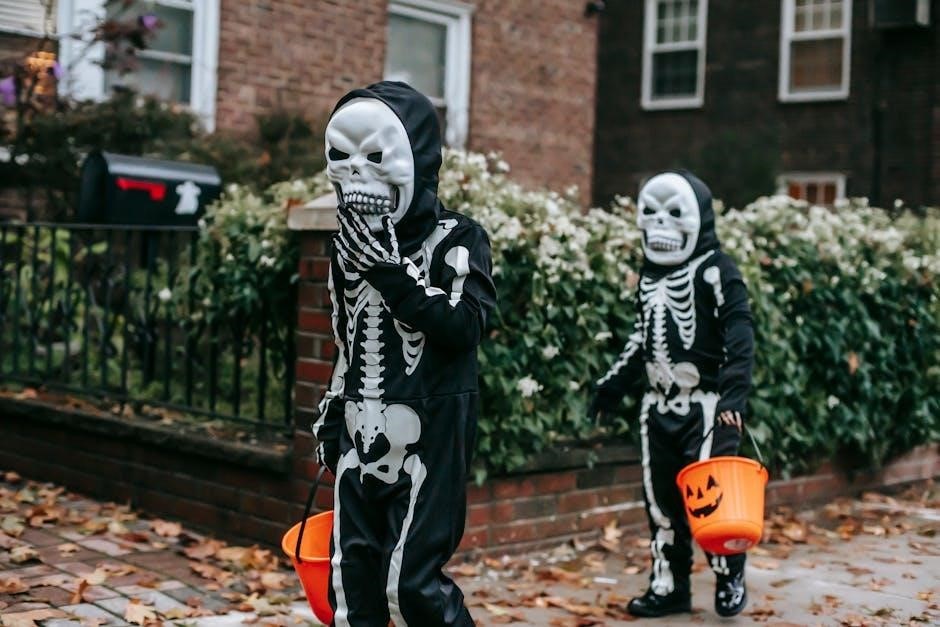
Mastering the art of the polite request is paramount for young trick-or-treaters. A simple, clear “Trick or treat!” delivered with enthusiasm is the traditional greeting, initiating the exchange with homeowners. Beyond this core phrase, incorporating “Please” and “Thank you” demonstrates excellent manners and appreciation for the offered treats.
Avoid demanding language or entitlement; remember, receiving candy is a privilege, not a right. Instead of simply grabbing, a polite “May I please have one?” shows respect. After receiving a treat, a sincere “Thank you!” is crucial, acknowledging the homeowner’s generosity.
Consider adding a friendly comment about their decorations or costume to further enhance the interaction. A genuine compliment can brighten a homeowner’s evening and create a positive experience for everyone involved. Practicing these phrases beforehand ensures a smooth and courteous trick-or-treating adventure.
Appropriate Costume Behavior
Costumes should be fun and imaginative, but always prioritize safety and respect. Avoid costumes that are excessively frightening or could be misinterpreted as threatening, especially in the current climate. Ensure costumes allow for free movement and clear visibility – tripping hazards and obscured vision are serious concerns.
Refrain from disruptive or disrespectful behavior while trick-or-treating. Running wildly, damaging property, or engaging in pranks is unacceptable. Remember that homeowners are extending kindness by offering treats, and it’s essential to reciprocate with polite and considerate conduct.
Consider the impact of your costume on others; avoid anything that could be culturally insensitive or offensive. A thoughtful approach to costume selection demonstrates maturity and respect for the community. Prioritize kindness and good sportsmanship throughout the evening, creating a positive experience for all.
Candy Collection Etiquette: Saying “Thank You”
Expressing gratitude is paramount when receiving treats. A sincere “Thank You” to each homeowner demonstrates respect and acknowledges their generosity. This simple gesture fosters positive interactions and reinforces the spirit of community during Halloween.
Avoid grabbing or demanding candy; instead, politely request treats and accept what is offered with grace. Remember that homeowners are voluntarily participating in this tradition, and a courteous attitude is greatly appreciated. Extend thanks not only for the candy but also for any decorations or effort put into creating a festive atmosphere.
Teach children the importance of good manners and emphasize that a heartfelt “Thank You” goes a long way. Modeling polite behavior sets a positive example and encourages a culture of gratitude. A little kindness can make a significant difference in brightening someone’s Halloween night.
Dealing with Disappointment (Not Getting Favorite Candy)
Halloween isn’t always about receiving the perfect candy. It’s crucial to manage expectations and prepare children for the possibility of not getting their most desired treats at every house. Disappointment is a natural emotion, and learning to handle it gracefully is a valuable life skill.
Encourage a mindset of gratitude – any candy received is a generous offering. Focus on the fun of dressing up, visiting neighbors, and the overall experience rather than fixating on specific sweets. Avoid complaining or showing displeasure to homeowners; it’s impolite and detracts from the festive spirit.
Remind children that everyone has different preferences, and homeowners offer what they can. Trading candy with friends later can be a fun way to acquire desired treats. A parent’s calm reassurance and positive reframing can help a child navigate disappointment and enjoy a happy Halloween.
Homeowner’s Guide to a Successful Halloween
Preparing your home involves selecting appealing candy, debating full-size versus fun-size options, and creating a welcoming atmosphere with decorations and safe, visible outdoor lighting.
Choosing the Right Candy
Selecting the ideal Halloween treats requires careful consideration. While variety is appreciated, universally liked options – chocolate bars, popular fruity candies – generally ensure satisfaction. The ongoing debate between full-size and fun-size candies reflects homeowner generosity and budgetary constraints; offering larger portions often creates a positive impression.
However, be mindful of allergies! Providing allergen-free options, or clearly labeling candies containing common allergens, demonstrates inclusivity and consideration for all trick-or-treaters. Nuts, while traditional, are increasingly avoided due to severe allergies. Consider non-candy alternatives like small toys or stickers for children with dietary restrictions.
Recent trends suggest a move towards individually wrapped candies for hygiene. Bulk bins, while economical, are less favored. Ultimately, the goal is to contribute to a joyful and safe Halloween experience for all neighborhood children, making your home a memorable stop on their route.
Full-Size vs. Fun-Size Candy Debate
The perennial Halloween question: full-size or fun-size? The debate centers on generosity versus cost-effectiveness. Full-size bars undoubtedly elicit greater excitement and are often perceived as a sign of a particularly welcoming home, creating a memorable experience for trick-or-treaters. However, the expense can be substantial, especially with high neighborhood participation.
Fun-size candies offer a more budget-friendly option, allowing homeowners to distribute treats to a larger number of children without breaking the bank. While smaller, they still provide a sweet reward and contribute to the overall Halloween spirit. Some homeowners strategically combine both – offering full-size bars to younger children or those in particularly creative costumes.
Ultimately, the choice is personal. Regardless of size, ensuring a variety of options and a cheerful demeanor are key to a successful and enjoyable Halloween for everyone involved. It’s about the gesture, not just the quantity.
Decorating for Trick-or-Treaters
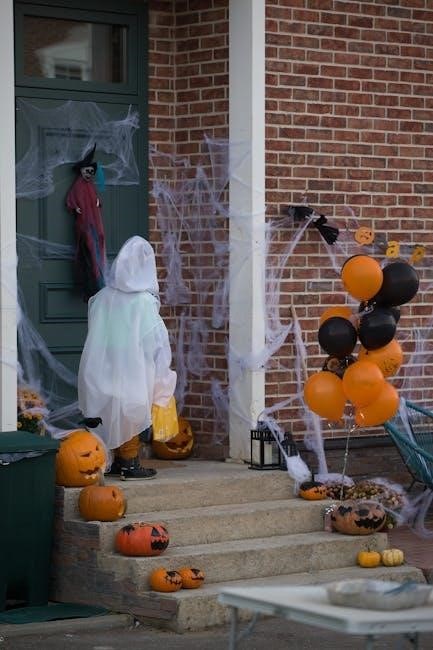
Creating a welcoming atmosphere is crucial for a successful Halloween. Decorations signal to trick-or-treaters that your home is participating and eager to share in the fun. Classic decorations like pumpkins, cobwebs, and spooky lighting are always popular choices, instantly evoking the Halloween spirit.
However, consider safety when decorating. Ensure pathways are clear of obstacles to prevent trips and falls. Avoid overly elaborate displays that might obstruct visibility or create hazards. Outdoor lighting is essential, not only for aesthetics but also for ensuring trick-or-treaters can safely navigate to your door.

The level of decoration is a personal preference – from simple and charming to elaborate and theatrical. The goal is to create a festive and inviting environment that adds to the overall Halloween experience for the neighborhood children. A well-decorated home shows you embrace the holiday’s spirit!
Outdoor Lighting and Safety
Prioritizing safety is paramount during trick-or-treating, and outdoor lighting plays a critical role. Well-lit pathways and doorways minimize tripping hazards and ensure children can clearly see where they are going. Consider using motion-sensor lights to illuminate areas as trick-or-treaters approach, adding an extra layer of security.
Avoid dimly lit areas or those obscured by decorations. Ensure porch lights are functioning correctly and are bright enough to provide adequate visibility. Decorative lighting, such as string lights or spotlights, can enhance the festive atmosphere, but should not compromise safety.
Homeowners should also be mindful of potential hazards in their yards, such as uneven surfaces or hidden objects. Removing these obstacles and ensuring a clear path will help prevent accidents. A well-lit and hazard-free yard demonstrates a commitment to the safety of visiting trick-or-treaters.
Trick-or-Treating Rules & Regulations (City Specific)
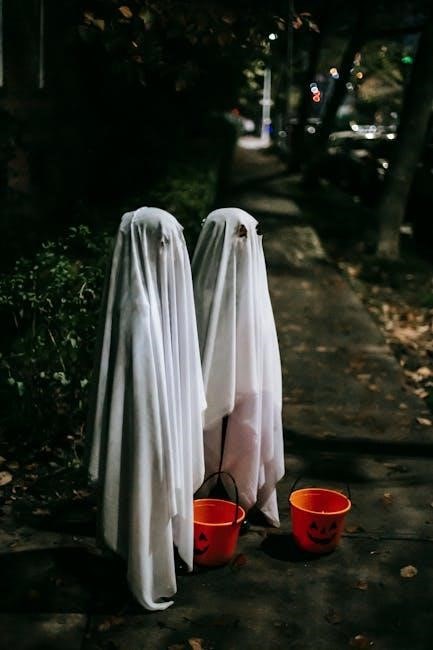
Cities establish guidelines, including age restrictions and designated hours, to ensure safe and orderly trick-or-treating; some localities even regulate costume appropriateness and behavior.
Chesapeake, Virginia, recently updated its rules after public concern, while other areas may have curfews or ordinances impacting the Halloween experience.
Age Restrictions for Trick-or-Treating
Determining appropriate age limits for trick-or-treating remains a localized issue, with varying regulations across different cities and towns. While a universal standard doesn’t exist, many communities are grappling with establishing guidelines to ensure safety and maintain the spirit of the tradition.
Historically, trick-or-treating was primarily enjoyed by elementary school-aged children, but participation often extends into the early teenage years. However, concerns about older teens engaging in disruptive or unsafe behavior have prompted some municipalities to implement age restrictions. Chesapeake, Virginia, serves as a recent example, having adjusted its rules following public outcry, though specific details of those changes weren’t widely publicized in the provided sources.
Generally, younger children should always be accompanied by adult supervision, regardless of local ordinances. For older children participating independently, it’s crucial to establish clear boundaries, discuss safe routes, and agree upon a return time. Ultimately, parental discretion plays a significant role in determining whether a child is mature enough to trick-or-treat unsupervised, even where no formal age limits are in place.
Trick-or-Treating Hours & Curfews
Establishing designated trick-or-treating hours is a common practice among municipalities aiming to balance festive fun with community safety and resident convenience. These timeframes typically fall within the evening of Halloween, allowing children to participate while ensuring homeowners aren’t disturbed for extended periods.
While specific hours vary considerably, a common window spans from dusk until around 9:00 PM. Some cities may even formally announce these hours, while others rely on customary practice. The implementation of curfews, often coinciding with the end of trick-or-treating hours, is also prevalent, particularly for younger children who require adult supervision.
The sources indicate that Chesapeake, Virginia, recently adjusted its rules, potentially impacting designated hours, though specifics remain unclear. Regardless of official regulations, it’s prudent for parents to establish a clear return time with their children and to be mindful of neighborhood norms. Respecting homeowners’ preferences and adhering to established timeframes contributes to a positive and safe Halloween experience for everyone involved.
Local Ordinances Regarding Costumes & Behavior
Many municipalities enact local ordinances to ensure Halloween festivities remain safe and respectful for all residents. These regulations often address costume appropriateness, prohibiting masks or attire that obscure identity to the point of hindering recognition, or those depicting violence or promoting illegal activities.
Behavioral guidelines are also frequently included, emphasizing respectful interactions with homeowners. Disruptive conduct, such as vandalism or aggressive demands for treats, is typically prohibited and may result in penalties. While arrests are rare – Chesapeake, Virginia hasn’t seen one in nearly 50 years – updated rules reflect a commitment to maintaining order.
Parents should familiarize themselves with local laws before allowing children to participate. Some areas may restrict trick-or-treating to specific neighborhoods or require permits for large gatherings. Adhering to these ordinances demonstrates community responsibility and helps ensure a harmonious Halloween for everyone, fostering a safe and enjoyable experience.
Safety Considerations for Trick-or-Treaters
Prioritize adult supervision, plan safe routes, inspect collected candy diligently, and exercise caution when interacting with unfamiliar individuals during these nighttime neighborhood excursions.
Adult Supervision Guidelines
For younger children, direct adult supervision is paramount during trick-or-treating. Accompanying them ensures their safety and allows for immediate intervention if needed. Consider the age and maturity level of each child; even seemingly responsible older children benefit from check-ins and a designated route.
Establish a buddy system, pairing children to walk together, even if they aren’t directly supervised by an adult for the entire duration. This fosters a sense of responsibility and mutual support. Adults should proactively scan neighborhoods, observing for potential hazards like traffic or unsafe properties.
Communicate clear expectations regarding staying on sidewalks, avoiding dark or isolated areas, and never entering a stranger’s home. Remind children to remain visible, perhaps with reflective tape or glow sticks, especially as dusk settles. A harried mother, as reported, might threaten to cancel trick-or-treating if basic safety isn’t prioritized!
Safe Route Planning
Prior to heading out, meticulously plan a safe and well-lit trick-or-treating route. Stick to familiar neighborhoods with established sidewalks and avoid cutting through backyards or dark alleys. Utilize one-way streets cautiously, ensuring children are visible to oncoming traffic, as noted in reports about quieter streets becoming busy on Halloween.
Share the route with a responsible adult who isn’t accompanying the group, providing an estimated return time. This allows for quick communication and peace of mind. Consider mapping out the route beforehand, identifying houses with well-lit porches and avoiding those that appear neglected or unsafe.
Emphasize the importance of staying together as a group and avoiding detours. Remind children to be aware of their surroundings and to report any suspicious activity to an adult immediately. A pre-planned route minimizes wandering and maximizes safety during the evening’s festivities.
Candy Inspection Procedures
Upon returning home, a thorough candy inspection is paramount. Discard any commercially wrapped treats that are unwrapped, torn, or appear tampered with in any way. Prioritize safety over sweetness; even seemingly minor damage warrants disposal. Remember historical concerns about Halloween treats bringing “horror” rather than happiness.
Inspect each item for signs of contamination, such as unusual odors, discoloration, or pinholes. While widespread incidents are rare, vigilance is key. Focus on factory-sealed candies, and be particularly cautious with homemade treats, unless you know and trust the source.
Parents should carefully examine all collected candy, even if children insist everything looks fine. Consider establishing a “safe candy zone” where inspected treats are placed, separate from the unexamined pile. This proactive approach ensures a worry-free Halloween experience for everyone involved.
Dealing with Strangers
Trick-or-treating inherently involves approaching homes and interacting with residents, but maintaining safety around strangers is crucial. Children should never enter a stranger’s home, even if invited. Stick to well-lit streets and familiar neighborhoods, and always trick-or-treat with a trusted adult or in a group.
Instruct children to avoid isolated areas or dark, unlit properties. If a house appears unoccupied or lacks external lighting, it’s best to skip it. Emphasize the importance of staying together as a group and communicating any uncomfortable encounters to their adult chaperone immediately.
Remind children that a safe response to any unsettling situation is to move away quickly and seek help from a trusted adult; While most interactions are positive, preparedness is key. Avoid engaging in conversation with strangers beyond a polite “trick-or-treat” and “thank you.”

Alternative Halloween Activities
Beyond traditional door-to-door visits, consider trunk-or-treat events, festive Halloween parties, or community celebrations for safe, enjoyable alternatives to conventional trick-or-treating.
These options provide controlled environments and diverse experiences, offering a delightful autumn experience for children and families alike.
Trunk-or-Treat Events
Trunk-or-Treat events have surged in popularity as a safe and convenient alternative to traditional trick-or-treating, particularly appealing to families seeking a controlled environment. Typically hosted in large parking lots – schools, churches, or community centers are common locations – participants decorate the trunks of their vehicles with Halloween themes.
Children then walk from car to car, collecting candy directly from the decorated trunks. This setup offers increased visibility and supervision, alleviating some safety concerns associated with navigating neighborhoods after dark.
Many events incorporate additional activities like costume contests, games, and music, enhancing the festive atmosphere. The concentrated nature of Trunk-or-Treats also fosters a strong sense of community, allowing neighbors to connect and celebrate together. It’s a fantastic option for younger children or those who may feel overwhelmed by the larger scale of traditional trick-or-treating routes.
Halloween Parties
Halloween parties offer a contained and festive alternative to door-to-door trick-or-treating, providing a structured environment for costumes and candy enjoyment. These gatherings, ranging from small family affairs to larger community events, often feature themed decorations, spooky snacks, and engaging games.
Costume contests are a staple, encouraging creativity and friendly competition. Party hosts typically provide a safe space for children to showcase their outfits and collect treats. Some parties even incorporate haunted house elements or spooky storytelling sessions, adding to the immersive experience.
Compared to traditional trick-or-treating, parties offer greater adult supervision and control over the candy distribution. They can be particularly appealing for families with young children or those seeking a more relaxed and predictable Halloween celebration. The focus shifts from neighborhood exploration to interactive fun within a familiar setting.
Community-Based Halloween Celebrations
Community events are increasingly popular alternatives to traditional trick-or-treating, offering organized and safe Halloween experiences for families. These celebrations often take place in public spaces like parks, schools, or community centers, fostering a sense of togetherness and shared festivity.
Many towns and cities host Halloween festivals featuring costume parades, pumpkin carving contests, and live entertainment. These events provide a controlled environment with increased security and adult supervision, addressing safety concerns associated with neighborhood trick-or-treating.
Trunk-or-Treat events, where participants decorate their car trunks and distribute candy from their vehicles, are a prime example of community-based celebrations. They offer a convenient and accessible option, particularly in areas with limited housing density or challenging walking routes. These events emphasize inclusivity and provide a fun, family-friendly atmosphere.